
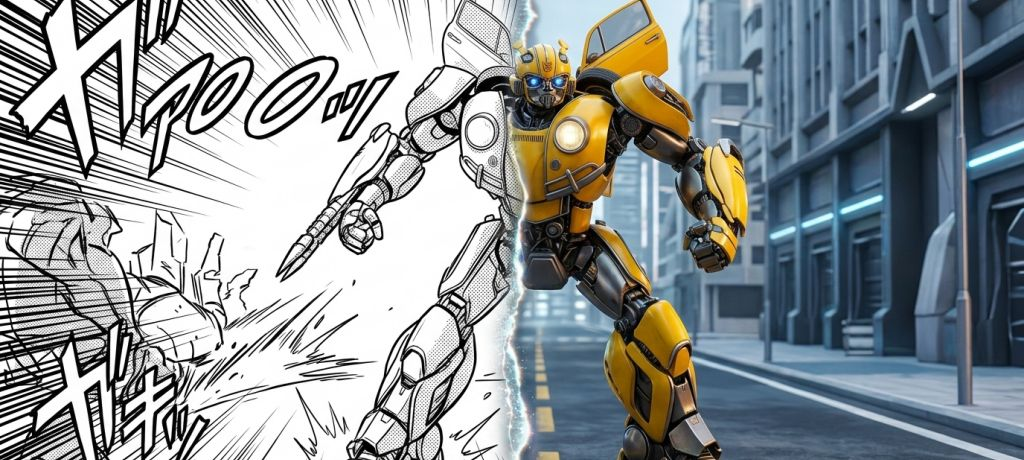
The split-dimension transformation prompt is a professional visual framework designed to create a surreal “2D-to-3D” phase-shift effect. It utilizes a weighted multi-prompt structure to bisect the canvas into a monochrome manga panel and a cinematic hyper-realistic world. This logic enables a single character to step across the artistic boundary, transforming from flat ink textures into 3D skin and fabric. It provides high value for creators visualizing the transition between classical illustration and modern rendering.
Split-Dimension Transformation Prompt
Model fit: Gemini (Nano Banana Pro&2) and similar image models. Use this prompt by replacing the [SERIES_NAME] and [CHARACTER] variables while keeping the multi-prompt weights (::) for precise compositional balance.
A split-dimension photograph::5
Left side: A black and white 2D manga panel showing the world of [SERIES_NAME]::3
Right side: A hyper-realistic 3D world::3
Center Subject: [CHARACTER] stepping across the boundary line, transforming from 2D sketch to 3D figure::5
Details: AI to infer costume details and signature weapon/prop based on [CHARACTER]::4
Style: Surrealism, Optical Illusion, ArtStation masterpiece, 8k::2
Box, frame, borders, flat, low resolution::-2
How to Use
- Variable Replacement: Specifically update
[SERIES_NAME]and[CHARACTER]to trigger the AI’s internal knowledge of specific anime or comic styles. - Weight Preservation: Keep the
::number values exactly as written; they are critical for preventing the 3D side from overwhelming the 2D manga side. - Negative Prompting: The
::-2section is mandatory to ensure the 2D side feels like a “dimension” rather than a framed picture on a wall.
Use Cases
- Anime Adaptations: Visualizing how 2D characters would look in a high-budget live-action film environment.
- Marketing Posters: Creating eye-catching promotional material for cross-media gaming or publishing events.
- Fan Art Exploration: Providing a unique technical framework for “breaking the fourth wall” character studies.
Why This Prompt Works
The split-dimension transformation prompt succeeds through semantic contrast and precise weight-anchoring. By assigning a high weight of ::5 to the transformation itself, it forces the AI to prioritize the boundary where two disparate rendering styles meet. This prevents “style bleed,” ensuring the 2D side remains strictly monochrome and flat while the 3D side adopts full PBR (Physically Based Rendering) lighting and skin textures.
Common Mistakes & Fix
- Style Bleeding: The manga side looks too realistic. Fix: Re-emphasize “black and white” and “ink sketch” in the left-side description.
- Alignment Issues: The character’s two halves don’t match. Fix: Be very specific with the
[CHARACTER]description (e.g., “red cloak,” “scared face”).
FAQ
- Can I use this for Western comics?
Yes. Replace “manga” with “American comic book style” to achieve a DC or Marvel style transition.
- Does it work for other media?
Absolutely. You can change “2D manga panel” to “8-bit pixel art” or “oil painting” to create different dimensional shifts.
Example
Picture
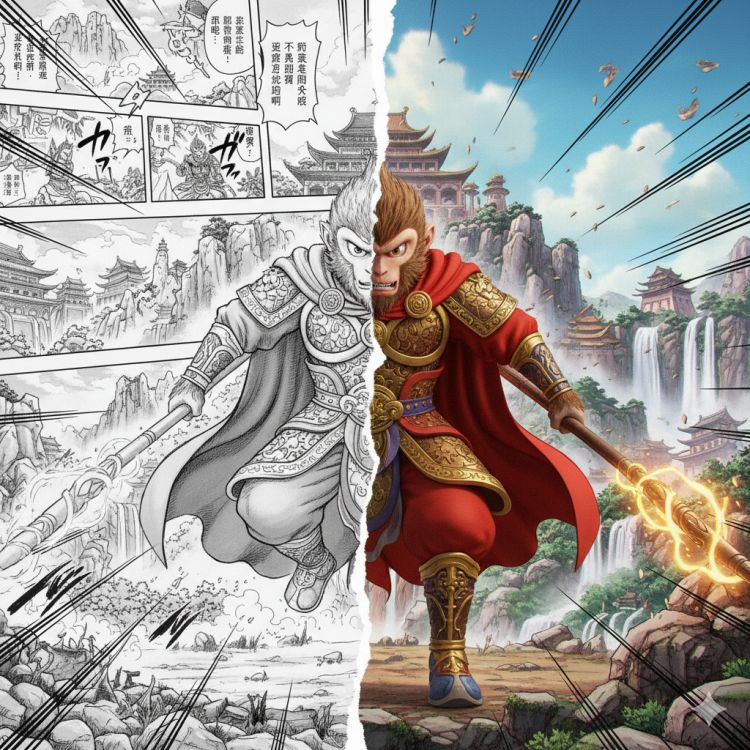
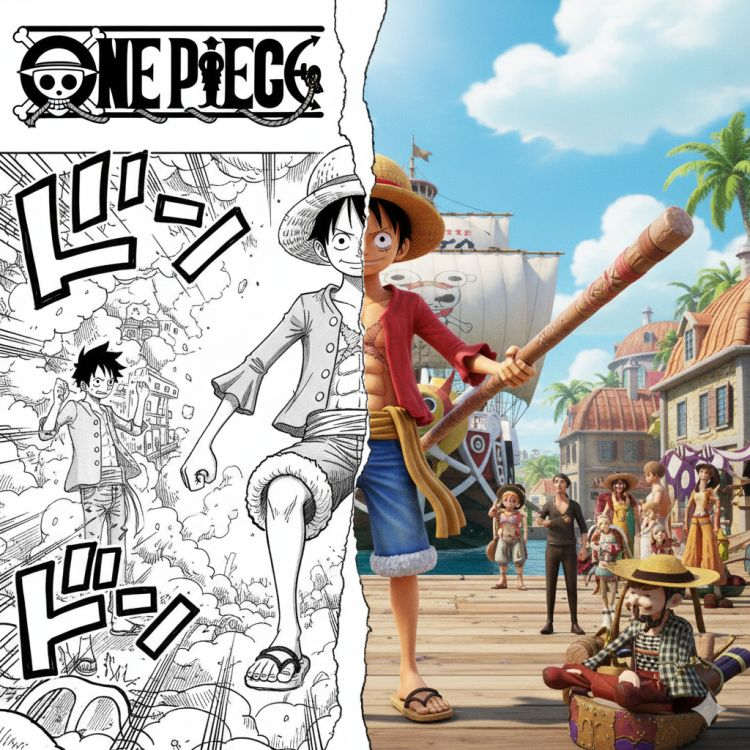
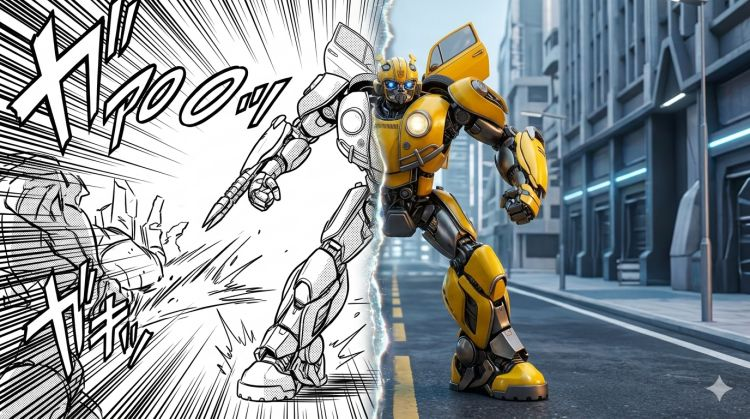
Use this prompt to generate your version? Share in the comments or on Twitter!
Explore more? View the Image & Design and Business & Productivity category.
I hope you found this split-dimension transformation image generation AI prompt helpful.
Follow me @bigprompt for more.
Like/Repost if you can this prompt.
Internal link:
Ultra-Dense Office Wimmelbilderbuch Style Cutaway Prompt
3D Character Sketchbook Emergence Prompt for Cinematic Art
3×3 Product Editorial Grid Prompt for Commercial Campaigns
Professional Fridge Raid Portrait Prompt for Immersive Interior POV
Anamorphic Street Art: Hyper-Realistic 3D Pavement Chalk Illusion
Big Prompt Hub Review
This split-dimension transformation prompt is a masterclass in structural weighting. It solves the common AI issue of style averaging by using a strict split-frame logic. The technical inclusion of negative weights for “Box” and “Borders” ensures the result is a seamless, professional-grade illusion rather than a simple collage, making it a robust asset for high-concept visual storytelling.
Leave a Reply