
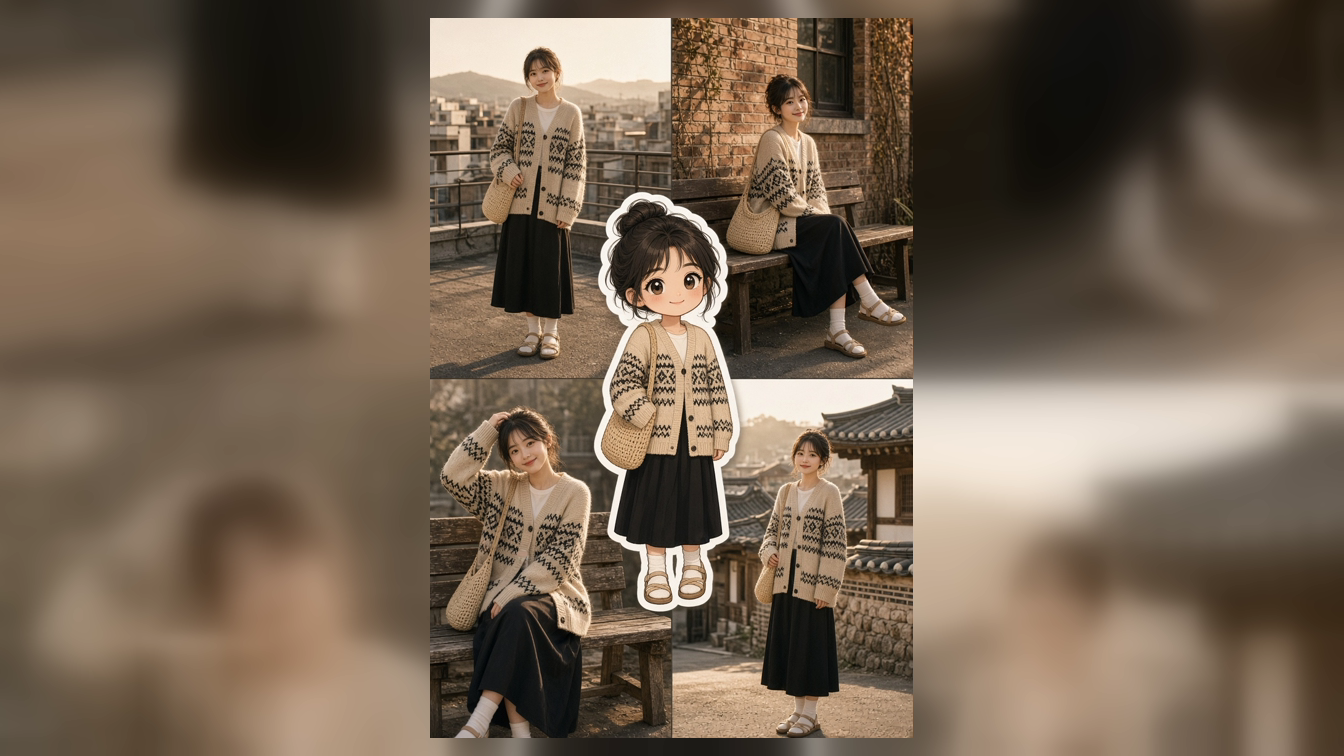
For image creators, an anime photo collage prompt presents a difficult continuity test: holding one identity and outfit together across four photographs and one illustration. This version defines the 2×2 background grid and central full-body sticker layout for fashion lookbooks, social posts, and character-led visual concepts.
Image Example
Strategic Deployment Guide
Model fit: Gemini is the primary choice because this workflow needs an uploaded person reference, structured composition instructions, and mixed photographic and illustrated output. ChatGPT Images is a fallback. Upload a clear reference image and state that it controls the face, hair, skin tone, and wardrobe—not the backgrounds. Fill every variable, then compare the five faces, hands, clothing details, and bag.
Anime Photo Collage Prompt Code
INPUTS
Use the uploaded [REFERENCE PERSON IMAGE] as the identity guide.
Subject: [SUBJECT DESCRIPTION]
Hairstyle and defining features: [HAIR AND FACIAL FEATURES]
Top or outerwear: [TOP OR OUTERWEAR]
Bottom: [BOTTOM]
Footwear: [FOOTWEAR]
Bag or accessory: [BAG OR HERO ACCESSORY]
Scene plan: [FOUR LOCATION-AND-ACTION SCENE DESCRIPTIONS]
Central style: [CENTRAL ILLUSTRATION STYLE]
Lighting: [LIGHTING]
Color treatment: [COLOR TREATMENT]
Aspect ratio: [ASPECT RATIO]
MAIN CONCEPT
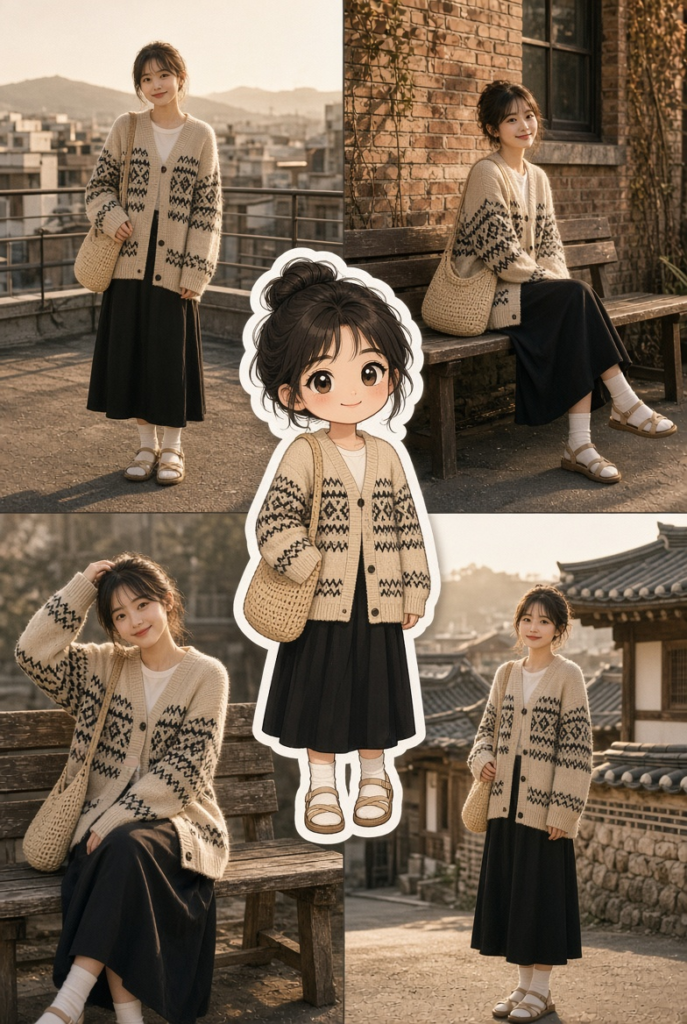
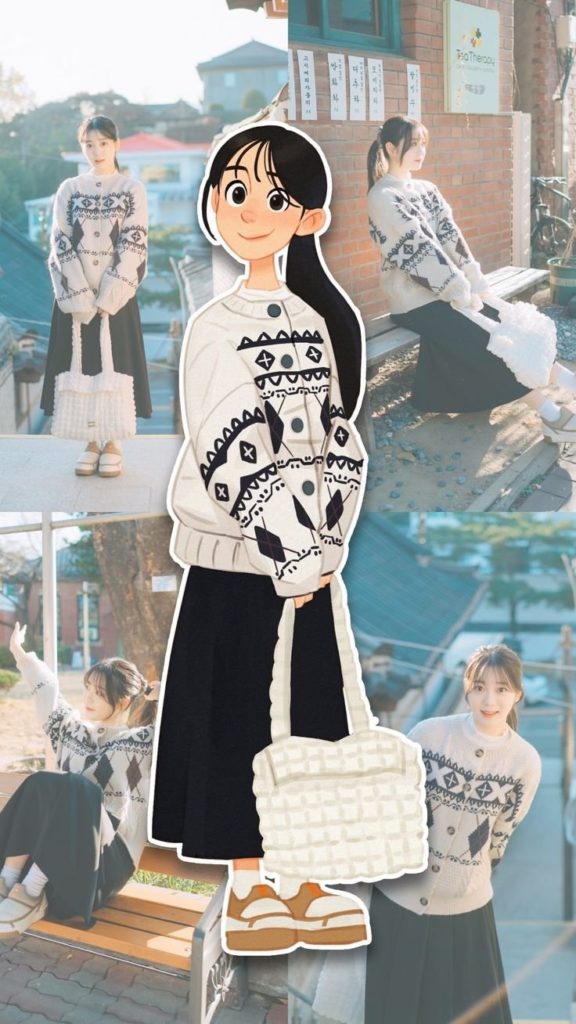
Create a vertical [ASPECT RATIO] mixed-media character collage. Arrange four photorealistic lifestyle photographs as a clean 2×2 background grid, then place one large full-body illustrated version of the same subject over the center. Preserve a clear visual hierarchy: four readable photo scenes behind, one dominant illustrated sticker character in front.
CHARACTER CONTINUITY
Depict the same recognizable subject in all five appearances. Keep the face shape, skin tone, hairstyle, defining features, body proportions, and age presentation visually coherent with the reference image. Keep the complete outfit and accessories identical in every scene. Do not introduce alternate garments, colors, bags, shoes, hairstyles, or jewelry.
PHOTO SCENE 1 — TOP LEFT
Show the subject [SCENE 1 LOCATION AND ACTION]. Use natural posture, believable anatomy, and enough environmental detail to establish the location without competing with the subject.
PHOTO SCENE 2 — TOP RIGHT
Show the subject [SCENE 2 LOCATION AND ACTION]. Vary the camera angle while preserving facial identity, outfit details, and accessory placement.
PHOTO SCENE 3 — BOTTOM LEFT
Show the subject [SCENE 3 LOCATION AND ACTION]. Use a relaxed candid pose and keep hands, fingers, legs, and footwear anatomically correct.
PHOTO SCENE 4 — BOTTOM RIGHT
Show the subject [SCENE 4 LOCATION AND ACTION]. Keep the expression warm and natural, with the same styling and recognizable face.
CENTRAL ILLUSTRATED CHARACTER
Create a full-body [ILLUSTRATION STYLE] version of the same subject in the exact same outfit. Pose the character [CENTRAL POSE AND PROP ACTION]. Use large expressive eyes, a gentle smile, clean outlines, simplified but faithful clothing patterns, and a thick white die-cut sticker border. Keep the entire figure visible from hair to shoes and place it prominently over the seams of the four photographs.
VISUAL STYLE
Use [LIGHTING] and [COLOR TREATMENT], natural shadows, realistic skin texture, subtle depth of field, balanced contrast, and a dreamy editorial atmosphere. Blend photorealistic photography with a cute polished illustration while keeping the collage clean and legible.
OUTPUT
Vertical 9:16 composition, high detail, polished mixed-media collage, four distinct photo panels, one centered full-body sticker character, consistent margins, no text, no logos, no watermark.
NEGATIVE PROMPT
different person, inconsistent face, changed hairstyle, changed outfit, missing clothing item, duplicate subject within one panel, extra limbs, malformed hands, extra fingers, cropped feet, warped bag, mismatched patterns, deformed face, plastic skin, flat lighting, muddy colors, cluttered grid, hidden background panels, weak sticker outline, incomplete central figure, text, logo, watermark.
Implementation Steps
- Choose one reference: use a sharp, front-facing image with visible hair and facial features. If the outfit must match exactly, make sure the clothing and accessories are also easy to read.
- Write four genuinely different scenes: vary the pose, camera angle, and setting, but repeat the same wardrobe description in the shared outfit variable instead of rewriting it differently for every panel.
- Generate the complete layout first: judge the 2×2 grid and central sticker at thumbnail size, then inspect faces, hands, cardigan patterns, shoes, and bag at full size. Repair only the failed region when the model supports regional editing.
Application Scenarios
- Fashion lookbooks: show one outfit across several lifestyle settings while the central illustration works as a recognizable campaign mascot.
- Creator profiles: turn a portrait reference into a vertical introduction card for social posts, channel covers, or personal branding.
- Character campaigns: combine real-world product or location photography with a sticker-style figure for launches, travel stories, or seasonal promotions.
Why This Prompt Works
The prompt separates stable controls from scene variables. Identity, wardrobe, grid structure, and sticker treatment stay fixed; locations, actions, lighting, and illustration style can change. That division reduces contradictory instructions and makes the composition reusable. The central figure also hides the intersection of the four panels, turning a difficult seam into the visual focal point.
Troubleshooting & Optimization
- If the faces drift: shorten the scene descriptions, repeat “same recognizable subject as the reference,” and use the clearest reference image available. Compare all five faces before accepting the result.
- If clothing changes: move every garment into one complete outfit variable, specify exact colors and patterns once, and remove competing fashion adjectives from the scene descriptions.
- If the center covers too much: request a full-body figure occupying roughly 40–50% of the canvas height, with each photo panel retaining a visible face and environmental cue.
- If the layout becomes a single scene: prepend “four separate rectangular photographs in a strict 2×2 grid” and state the panel positions before describing any location.
FAQ
- Q: What is an anime photo collage prompt?
A: It is an image-generation prompt that combines realistic photographs with an illustrated anime-style character in one designed composition. - Q: Do I need a reference image?
A: A reference is strongly recommended when the same person must remain recognizable across four photos and one illustration. Without one, the model will invent the identity. - Q: Can I change the outfit or locations?
A: Yes. Replace the bracketed outfit, scene, lighting, and illustration variables while keeping the 2×2 background and central sticker structure intact. - Q: Can this prompt keep the same face in every panel?
A: Results vary by model. Use a strong reference, compatible identity controls, and a final visual review to catch facial drift.
Continue with related collage layouts:
For a playful alternative, try the 3D cartoon sticker collage prompt. For a more editorial page treatment, use the fashion scrapbook prompt. The manga page prompt offers another structured multi-panel composition.
Explore more visual systems in Image & Design and follow @bigprompt for new prompt workflows.
Big Prompt Hub Review
This prompt is strongest as a reusable composition system: one reference, one wardrobe, four scene variables, and one illustrated focal character. The supplied example demonstrates the method clearly, but continuity still depends on the chosen model and reference controls. Treat the first result as a layout proof, then check every face, hand, garment pattern, and accessory before public use.
Leave a Reply
You must be logged in to post a comment.