
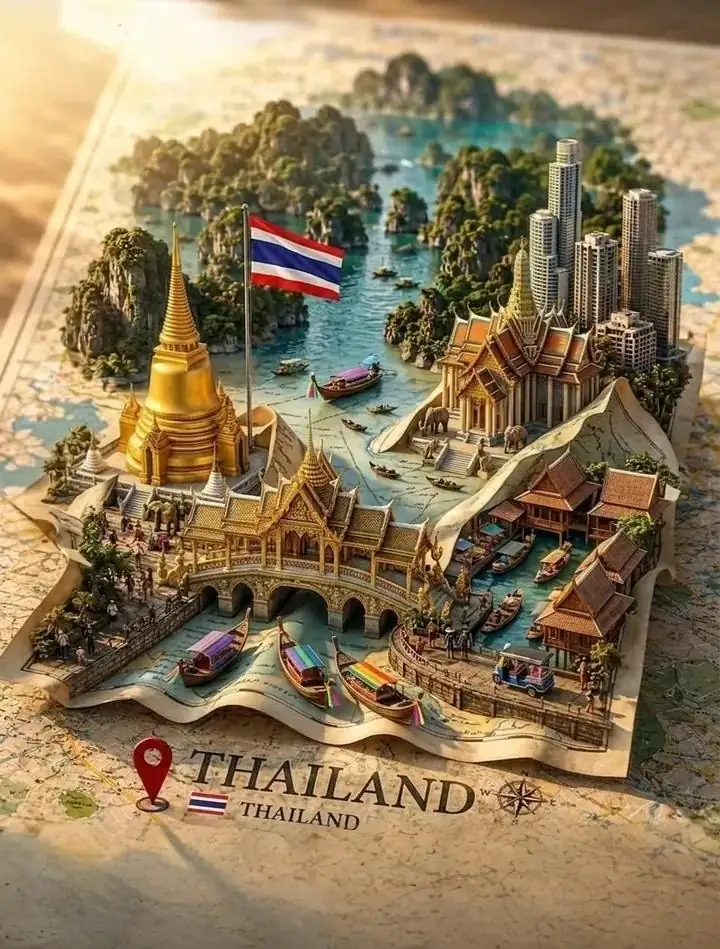
Travel marketers need a pop-up map diorama prompt when the destination has to feel geographic, collectible, and hand-built at the same time. It turns the map itself into the stage, so landmarks, waterways, transport, and street life rise from one folded travel object instead of floating as unrelated postcard elements.
Image Examples


Strategic Deployment Guide
Model fit: GPT Image 2 on ChatGPT is a strong first pass for folded paper geometry, layered landmark density, and warm travel-poster polish. Gemini is useful for faster destination swaps and alternate landmark mixes, but both models still need manual cleanup for tiny labels, route markings, and any client-facing map text.
Pop-Up Map Diorama Prompt Code
CORE SCENE:
A hyper-realistic 3D pop-up diorama of [location] emerging seamlessly from a vintage folded topographical map, as if the destination is physically unfolding from the paper itself. The miniature scene should showcase the most iconic landmarks, architecture, landscapes, cultural elements, and modern city features of [location], arranged into a visually balanced and cohesive travel-inspired composition.

DESTINATION CONTENT:
Include famous landmarks of [location], traditional architecture, local transportation, cultural symbols, waterways, bridges, native vegetation, miniature people, and representative daily-life activities.

Blend historic and contemporary elements, with modern skyscrapers where appropriate. Incorporate natural features unique to the destination, such as mountains, beaches, deserts, forests, lakes, rivers, cliffs, islands, or countryside landscapes.

FLAG AND MINIATURE LIFE:
Place a large [country or region flag] flagpole prominently within the scene. Add tiny vehicles, boats, market stalls, wildlife, and local cultural details to create a living miniature world.

Keep the entire diorama rising from the map surface with realistic folded and curled paper edges, so the result reads like a pop-up book and paper sculpture rather than a normal aerial render.

MAP BASE:
The map beneath should feature subtle cartographic details, route markings, a compass rose, and a location pin with the text "[location]" elegantly integrated into the design.

Water surfaces should have realistic reflections and transparency. Architecture should be highly detailed with handcrafted precision and destination-specific authenticity.

LIGHTING AND MATERIAL READ:
Use warm golden-hour sunlight, cinematic atmosphere, volumetric lighting, realistic shadows, shallow depth of field, tilt-shift miniature photography, ultra-detailed textures, photorealistic materials, intricate environmental storytelling, travel-poster aesthetic, collectible souvenir model quality, masterpiece composition, and 8K resolution.

STYLE KEYWORDS:
3D pop-up map diorama, paper sculpture, miniature world, travel destination showcase, tilt-shift photography, photorealistic architecture, cinematic lighting, ultra-detailed, tourism artwork, handcrafted miniature city, premium travel poster, realistic paper engineering, luxury souvenir aesthetic.

SCENE TRANSLATION LOGIC:
When you swap [location], keep the same folded-map stage, destination-specific landmark logic, living miniature props, and paper-engineering effect. Do not add foreign landmarks or mixed national symbols outside the identity of [location].
Why This Framework Functions
This framework works because it gives the model one dominant structure before style starts to spread: the folded map is the stage, the landmark cluster is the identity system, the flagpole is the civic anchor, and the miniature props sell scale. That division helps the model keep the render readable. Without it, travel prompts often drift into generic skyline montages or postcard collages where the destination never fully locks.
Implementation Steps
- Lock one location scope: Decide whether [location] is a country, city, or region before generation. Mixed scope is the fastest way to get the wrong landmarks.
- Balance three anchor layers: Push one heritage cluster, one modern cluster, and one natural or waterfront zone so the scene reads as a destination, not just architecture.
- Keep the map visible: Make sure the folded paper edges, compass, route markings, and location pin stay readable. If the landmark mass hides the base, reduce density and regenerate.
- Do a post-render typography pass: Rebuild the location label, compass letters, and any route text in Figma or Photoshop after generation. The visual structure is the asset; the microtype should be treated as editable.
- Use a second pass for landmark purity: If the skyline starts borrowing neighboring-country architecture, rerun with a tighter destination brief instead of adding more decorative style words.
Application Scenarios
- Tourism campaign boards: Destination concept visuals for launch decks, paid social mockups, and seasonal travel promotions.
- Souvenir and gift concepts: Miniature city artwork for premium prints, postcards, travel-book covers, and collectible merch exploration.
- Travel creator branding: Hero visuals for destination guides, newsletters, YouTube covers, and itinerary lead magnets.
- Hospitality presentations: Region-specific lobby art, visitor welcome assets, and local-experience concept boards for hotels or travel operators.
Why This Prompt Works
This prompt works because it pairs destination recognition with material logic. The paper folds, curled edges, map markings, and tilt-shift blur all reinforce the same miniature read, while the landmarks and local activity give the render a reason to exist beyond decoration. That combination makes the scene feel closer to a luxury souvenir model than a normal tourism poster, which is why it can carry both campaign mood and place-specific storytelling.
Troubleshooting & Optimization
- Scene floats above the map: Append emerging seamlessly from the folded map surface, paper edges visibly curled and attached to the base.
- Wrong-country landmarks appear: Append destination-specific authenticity, no foreign landmarks, no mixed national symbols.
- Miniature scale is weak: Append tilt-shift miniature photography, tiny people, tiny vehicles, shallow depth of field.
- Water looks flat or fake: Append realistic reflections, transparent water surfaces, small boats casting soft shadows.
- Map text breaks down: Keep the label minimal in-prompt, then rebuild the final place name and compass letters manually after render.
Common Questions
- Q: What is a pop-up map diorama prompt used for?
A: It is used to turn a city, country, or region into a folded paper travel miniature with landmarks, local culture, water or terrain features, and collectible destination styling. It works well for tourism visuals, souvenir concepts, and travel-brand art direction. - Q: Can I use the same structure for both cities and countries?
A: Yes, but keep the scope consistent within one render. A city version should emphasize one skyline and nearby cultural anchors, while a country version can mix multiple landmark zones and larger natural features. - Q: How do I stop the result from becoming a generic postcard collage?
A: Make the folded map the structural base and give each landmark cluster a role: heritage, modern life, and environment. The more the scene behaves like one engineered object, the less it drifts into random travel decoration.
Use this prompt to generate your version? Share in the comments or on Twitter!
Explore more? View the Image & Design or Marketing & Growth category.
I hope you found this travel destination AI prompt helpful.
Follow me @bigprompt for more.
Like/Repost if you can this prompt.
Football Collectible Diorama Prompt for Museum-Style Player Boxes
World Cup Prompt Pack for Trophy Ads, Team Posters, and Match-Day Graphics
A World Cup Trophy Prompt for Country Football Ads
Lock Sharp Edge Shadows with Landmark Papercraft Poster Prompt
Generate Recipe Infographic Template Prompt for Editorial Food Layouts
Big Prompt Hub Review
This prompt is strongest when you want a destination to read as an object, not just as scenery. The folded map, flagpole, and landmark bundle give the model a stable travel-souvenir frame that survives location swaps well. The main weakness is factual precision: AI can still blend nearby skylines, invent cartographic text, or overstate famous buildings. Use it for art direction, tourism moodboards, and collectible concept work first, then manually correct labels and landmark selection before client delivery or print.