
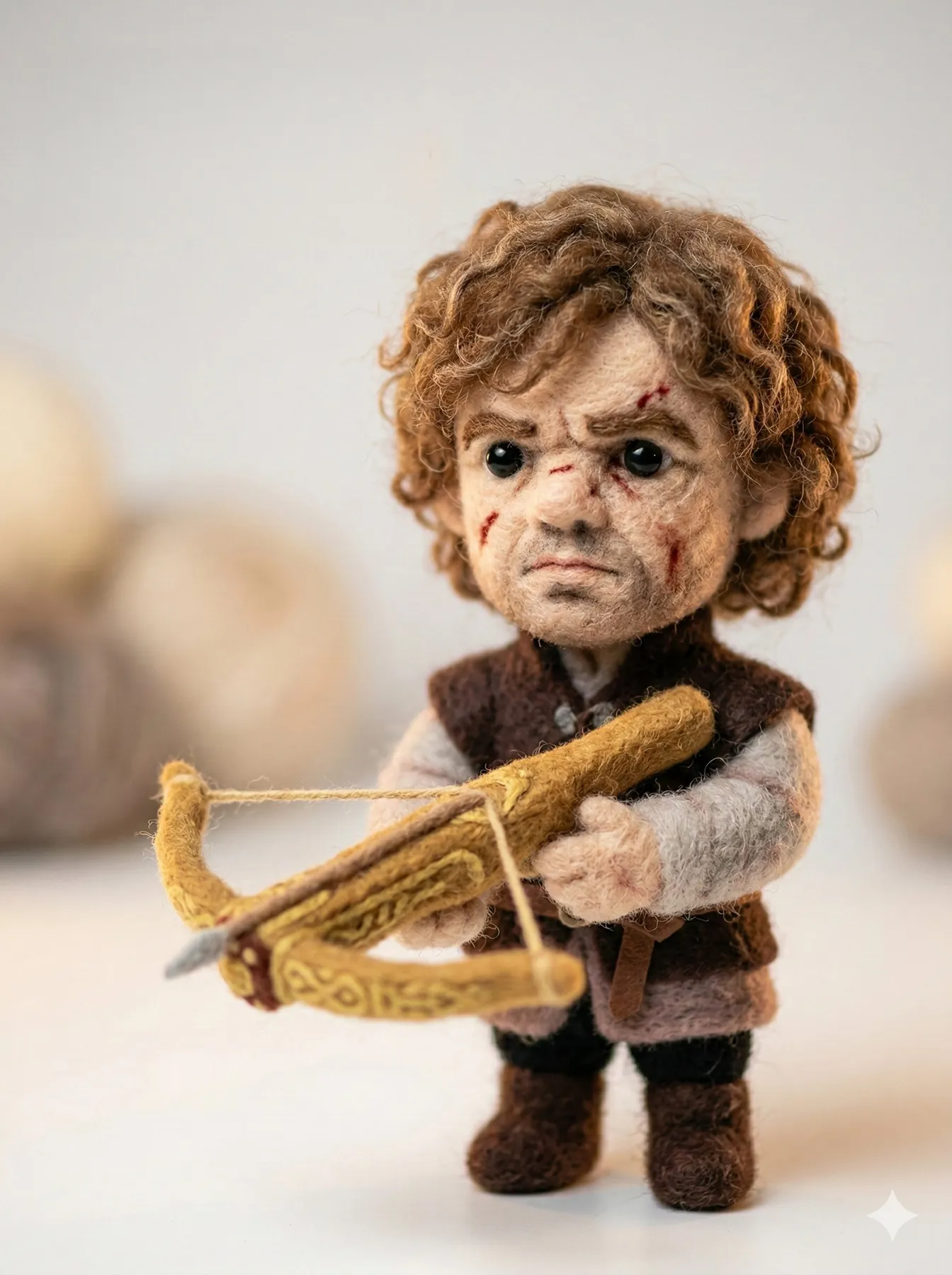
Toy makers, fan artists, and cozy-character creators need a handcrafted wool miniature prompt when a portrait or pet concept has to feel tactile instead of digitally polished. This template turns facial identity, fur markings, clothing details, scale cues, and one story prop into a needle-felted miniature with soft roving fibers, handcrafted seams, bead-eye charm, and macro-photo realism.
Image Examples


Strategic Deployment Guide
Model fit: Nano Banana 2 is a strong first pass for tactile felt fibers, soft macro lighting, and identity-preserving toy proportions. Midjourney is useful when you want stronger mood styling or more editorial scene dressing, but both benefit from a manual cleanup pass if tiny props, embroidery, or bead-eye placement drift.
Handcrafted Wool Miniature Prompt Code
CORE BRIEF:
Turn [subject] into a handcrafted needle-felted wool miniature. Keep the subject clearly recognizable, but rebuild it as a tiny felt sculpture with soft roving fibers, fuzzy handmade texture, and charming toy-like proportions.

IDENTITY LOCK:
Preserve the most recognizable features of [subject], including [hair, facial structure, fur markings, or silhouette cues]. If the source is a person, keep the likeness readable. If the source is a pet or creature, keep the markings and expression readable.

MATERIAL SYSTEM:
Render the figure in organic felt and wool textures with visible needle-punched fibers, fuzzy surface detail, tiny stitched seams, soft color transitions, and a tactile handmade finish. Use glossy black bead eyes or simple felted eyes unless the subject needs a different look.

PROPORTION RULES:
Stylize the miniature with a slightly oversized head, simplified limbs, rounded forms, and gentle toy-scale exaggeration. Keep the figure small and collectible rather than life-size or hyperreal human.

OUTFIT AND PROP TRANSLATION:
Recreate [clothing, collar, armor, or fur pattern] as simplified felt construction with stitched detail. Rebuild [key prop or accessory] as a miniature handmade object in matching wool, felt, or soft craft materials.

SCENE STAGING:
Place the miniature in [background mood or tiny environment]. Keep the environment supportive rather than dominant, with enough handcrafted context to reinforce the cozy miniature scale.

CAMERA AND LIGHT:
Shoot it as a macro close-up with shallow depth of field, soft studio or storybook light, warm highlights, gentle shadows, and smooth bokeh separation. Make the wool fibers, edges, and surface fuzz feel crisp at the point of focus.

STYLE DIRECTION:
Aim for tactile, charming, handcrafted realism rather than glossy 3D plastic. The final image should feel like a real needle-felted collectible photographed in a premium craft studio or miniature story set.

NEGATIVE PROMPT:
Avoid plastic toy finish, polished CGI skin, lifeless mannequin expression, stiff or broken limbs, smooth fabric replacing wool fibers, harsh flash lighting, muddy background clutter, and oversized props that break miniature scale.

PRODUCTION FORMAT:
Generate one high-resolution vertical image in a 4:5 or 3:4 portrait ratio, with a clean hero subject, strong tactile fiber detail, believable handcrafted miniature finish, and premium macro-photo clarity suitable for editorial sharing or product-style presentation.
Why This Framework Functions
This framework functions because it does not ask the model for “felt style” in the abstract. It locks three things together: recognizable subject identity, tactile fiber behavior, and miniature-scale photography. That combination keeps the render from drifting into plush-toy CGI, ordinary doll photography, or a generic cartoon character with no handcrafted credibility.
Implementation Steps
- Choose one clear subject anchor: Start with one portrait, pet, or character concept that has readable face, fur, clothing, and prop cues for the likeness lock.
- Name the handmade materials directly: Keep phrases like roving wool, needle-punched fibers, and stitched felt seams in the prompt so the model does not slide into plastic toy rendering.
- Translate only the key prop: Pick one main accessory such as a bow, sailboat, scarf, or satchel and let that prop carry the miniature story without overcrowding the composition.
- Keep the background soft: Use a simple storybook backdrop or shallow-bokeh environment so the tactile subject remains the hero of the macro composition.
- Run a realism check and post-render cleanup: If the output looks too smooth, rerender with stronger fiber detail, visible handmade seams, stricter no plastic controls, then do a light Photoshop cleanup only for eye placement or tiny prop edges.
Application Scenarios
- Creator avatars and profile art: Turn portraits into handmade profile images for artist bios, newsletter headers, or community creator cards.
- Pet storytelling posts: Rebuild cats, dogs, or mascot animals as tiny felt characters for Instagram posts, Etsy previews, or print-on-demand mockups.
- Collectible concept sheets: Mock up plush, felt, or handmade toy-product ideas for pitch decks, product listings, or prototype direction boards.
- Editorial craft campaigns: Build cozy handcrafted visuals for stationery launches, seasonal brand posts, or boutique product moodboards.
Why This Prompt Works
This prompt works because it translates the subject into materials, not just style labels. By controlling fiber type, seam visibility, bead-eye logic, macro lighting, and toy-like proportions at the same time, it gives the model enough structure to hold onto handcrafted realism across portraits, pets, and whimsical prop scenes.
Troubleshooting & Optimization
- Output looks like smooth CGI: Append visible wool fibers, needle-punched texture, fuzzy felt surface, handcrafted seams.
- The likeness disappears: Append preserve recognizable face shape, key markings, and color placement from the source subject.
- Props feel full-size instead of miniature: Append tiny handcrafted prop, scaled for a collectible felt figure.
- The scene gets too busy: Reduce the environment to soft bokeh background, simple handcrafted set dressing, subject remains dominant.
- Eyes or facial expression feel lifeless: Append charming bead-eye expression, subtle handcrafted face shaping, warm emotional read.
FAQ
- Q: What is a handcrafted wool miniature prompt used for?
A: It is used to turn a portrait, pet, or character concept into a tiny needle-felted figure with tactile wool texture, toy-like proportions, and macro-photo realism. - Q: Can I use this prompt for pets as well as people?
A: Yes. Keep the same wool, seam, and macro-lighting logic, then swap the identity lock from human facial cues to fur markings, ear shape, tail shape, and pet-specific props. - Q: Why rewrite the old JSON prompt into natural language?
A: The natural-language version is easier to copy, adapt, and extend. It keeps the same texture and staging controls while making the prompt usable for people who do not want to edit a rigid JSON object by hand.
Use this prompt to generate your version? Share in the comments or on Twitter!
Explore more? View the Image & Design or Fun & Creative category.
I hope you found this handcrafted wool miniature AI prompt helpful.
Follow me @bigprompt for more.
Like/Repost if you can this prompt.
Internal link:
AI Workflow Prompts That Connect Briefs, Interfaces, and Video
Travel Poster Prompts That Turn Destinations into Collectible Art
Brand Identity Guideline Board Prompt: Premium Brand Board Layout
Juice Advertising Poster Prompt: Pack-Led Fruit Splash Campaigns
TV Show Pixar-Style Poster Prompt: Animated One-Sheet Reimagining
Big Prompt Hub Review
This template is strongest when you want a subject to feel handmade, tactile, and emotionally warm without losing recognizability. Its main advantage is the material-control stack: wool fibers, stitched seams, bead-eye logic, and macro-photo lighting all work together to keep the miniature believable. The main risk is oversmoothing. If the model drops the fiber texture or scales props incorrectly, the result quickly turns into generic toy CGI instead of convincing needle-felt craft art.