
For miniature-scene artists, the isometric miniature room prompt starts with one practical decision: what must stay inside the cube? Keep the shallow cutaway cube, centered isometric camera, matte PVC proportions, and neutral backdrop fixed; then change the room, person, action, expression, atmosphere, and lighting.
Image Example
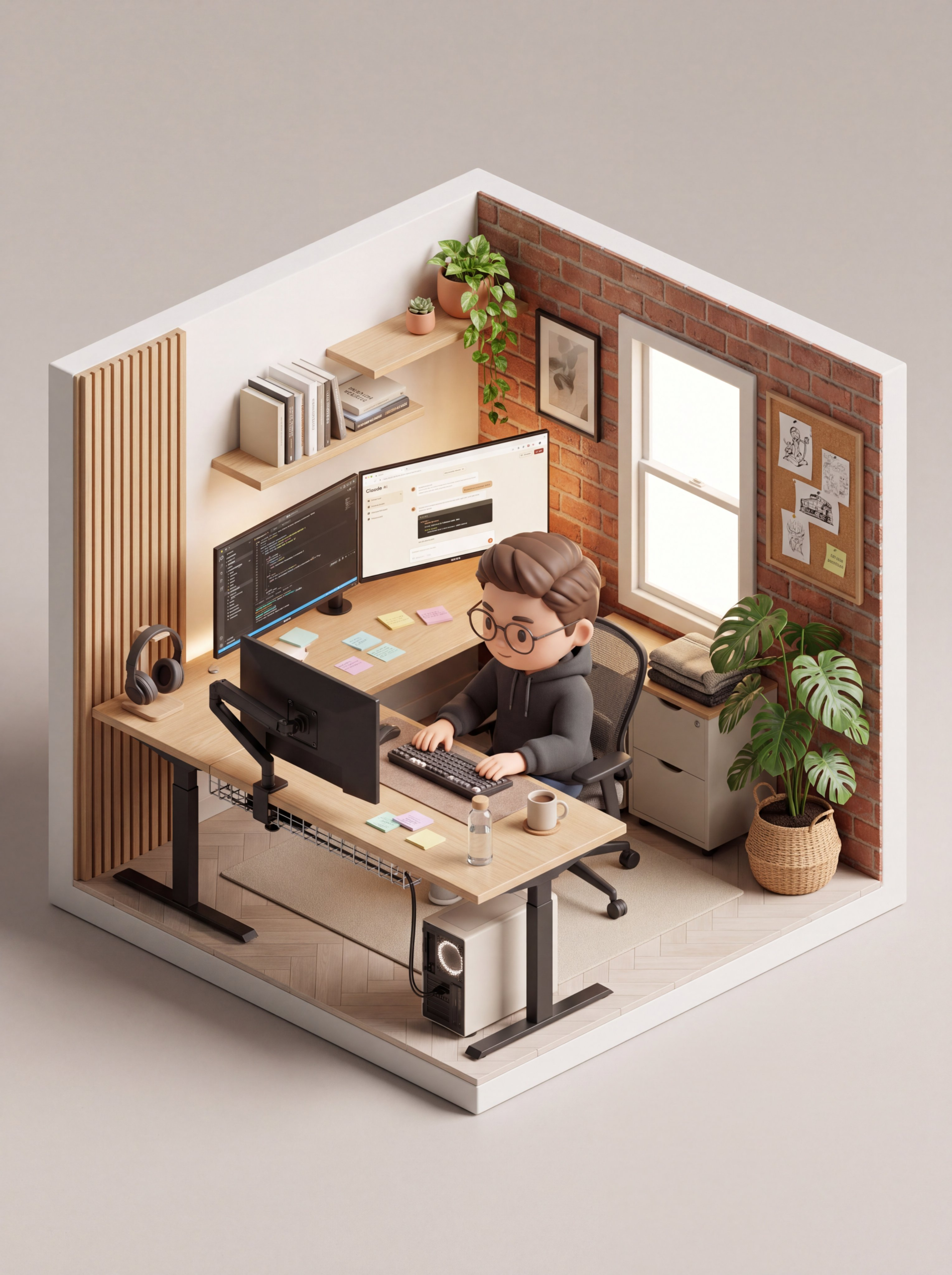
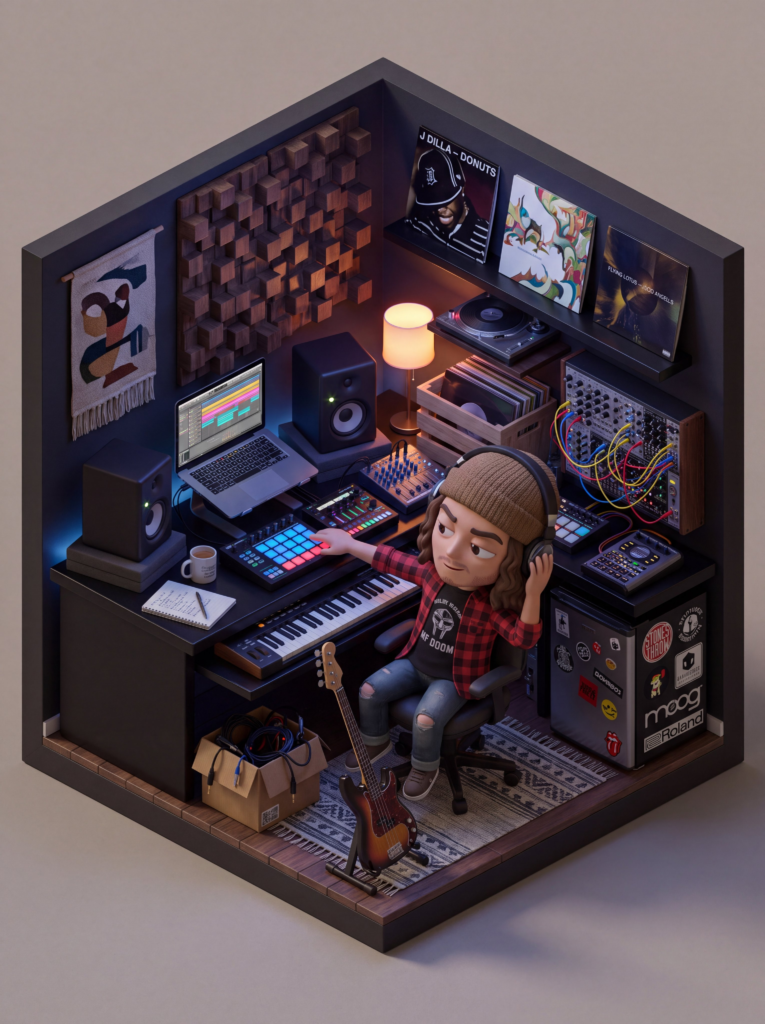
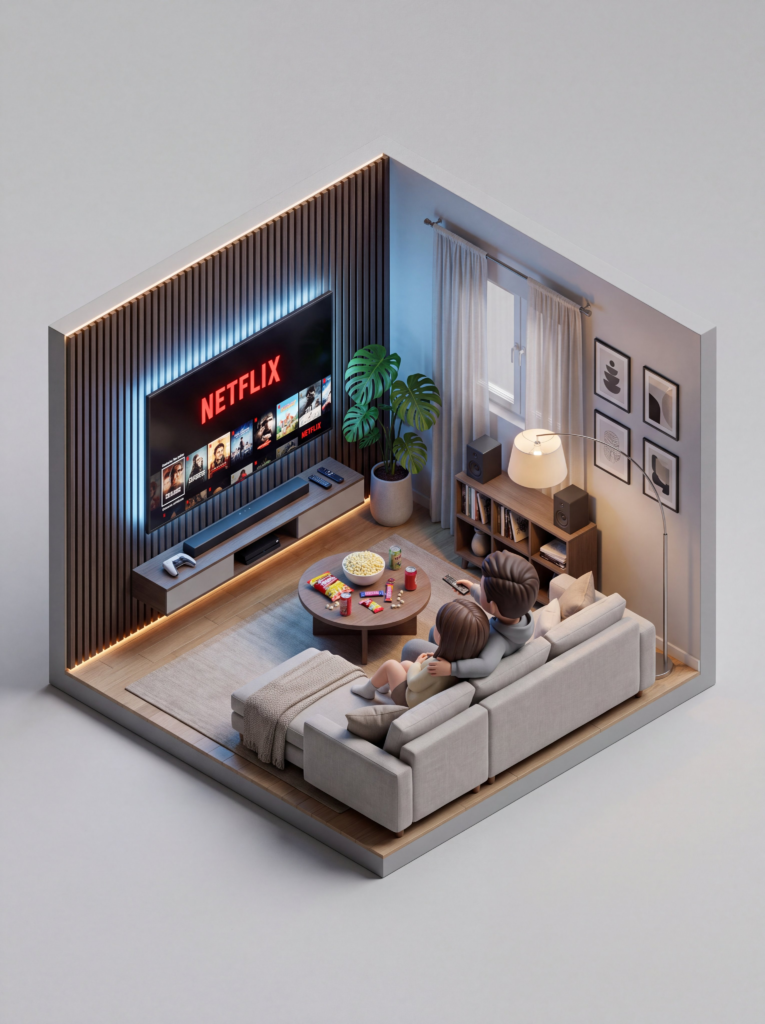
Strategic Deployment Guide
Model fit: Use ChatGPT image generation as the primary choice because it follows the long spatial constraint and reference-photo instruction in one pass. Use Gemini image generation as a fallback when you want a second composition reading or need to compare how it stages small room props. Upload a reference photo when using a real person; it controls visible hair, clothing, accessories, and other identity cues.
isometric miniature room prompt Code
An isometric 3D cube-shaped miniature room (shallow cutaway true cube; everything strictly contained within the cube). The room is [ROOM DESCRIPTION]: describe the theme, furniture, specific clutter, wall decorations, and key items in detail. Character: a chibi/figurine-style — [PERSON DESCRIPTION]. The character is [ACTION], with a [EXPRESSION] expression. Figure material looks like matte PVC, with big head / small body proportions. Lighting: [ATMOSPHERE NAME]: [LIGHT SOURCES]; realistic reflections and colored shadows. Camera: slightly elevated isometric three-quarter view, front cube edge centered; no elements protruding outside the cube. Photoreal materials with fine detail; neutral backdrop. Ultra-detailed, clean composition; no watermark. Negative prompt: no cropped cube, no objects outside the walls, no extra limbs, no watermark. Output: one clean portrait-oriented image with the full cube visible.Implementation Steps
- For an interior designer’s concept board, write five to ten concrete room objects in ROOM DESCRIPTION and remove anything that would protrude beyond the cube.
- For a personalized gift, upload the reference photo and describe only visible traits in PERSON DESCRIPTION.
- For a social thumbnail, choose one readable ACTION and EXPRESSION, then keep the front cube edge centered.
- For a product-story handoff, specify a warm key light and colored fill in LIGHT SOURCES so the product-use moment has grounded shadows.
- Inspect cube edges, limb count, object containment, camera centering, and crop before delivering the image to a client or publishing channel.
Application Scenarios
- Interior designers: Deliver a cube-shaped concept-board image for a home office, studio, or reading nook.
- Gift makers: Deliver a personalized hobby-room figurine scene to a recipient as a portrait-oriented print.
- Social content teams: Deliver a consistent series of cube thumbnails for short-form video episodes.
- Product marketers: Deliver a product-use diorama for a campaign landing page or launch presentation.
Why This Prompt Works
The fixed cube and camera establish a stable spatial frame before creative details are added. Separate variables for room, person, action, expression, and light let the same composition support many themes without carrying example-specific identities into the next image. Explicit containment and the negative prompt create a clear visual acceptance test.
Troubleshooting & Optimization
- Furniture breaks the cube: append “scale every prop to fit behind the front cube edge; nothing crosses the outer walls.”
- The person loses likeness: append “use the uploaded photo only for visible hair, clothing, glasses, and face shape; keep the figurine stylized.”
- The scene is flat: append “add warm key light, cool fill, soft occlusion, and colored contact shadows.”
- The room is noisy: remove secondary clutter and keep one hero furniture grouping plus three meaningful accents.
isometric miniature room prompt FAQ
- Q: What is an isometric miniature room prompt?
A: A reusable image template for a contained cube diorama with variable room, person, action, expression, and lighting. - Q: Should I upload a reference photo?
A: Upload one when the figurine should reflect a real person, and state that it controls visible traits only. - Q: How do I know the result passed?
A: Confirm the entire cube is visible, every object stays inside it, the action reads clearly, and lighting creates grounded shadows.
Explore Image & Design and Prompt Engineering Guides for adjacent visual workflows.
Continue with Branding Flat Lay Mockup Prompt, Football Celebration Poster Prompt, and Aztec Footballer Poster Prompt.
Follow @bigprompt for more reusable image prompts.
Big Prompt Hub Review
This reusable template is strongest when one recognizable subject must sit inside a carefully framed miniature interior. Its limitation is the cube boundary: layouts that depend on full-scale architecture or precise typography need a separate workflow and a closer manual check.
Leave a Reply
You must be logged in to post a comment.