
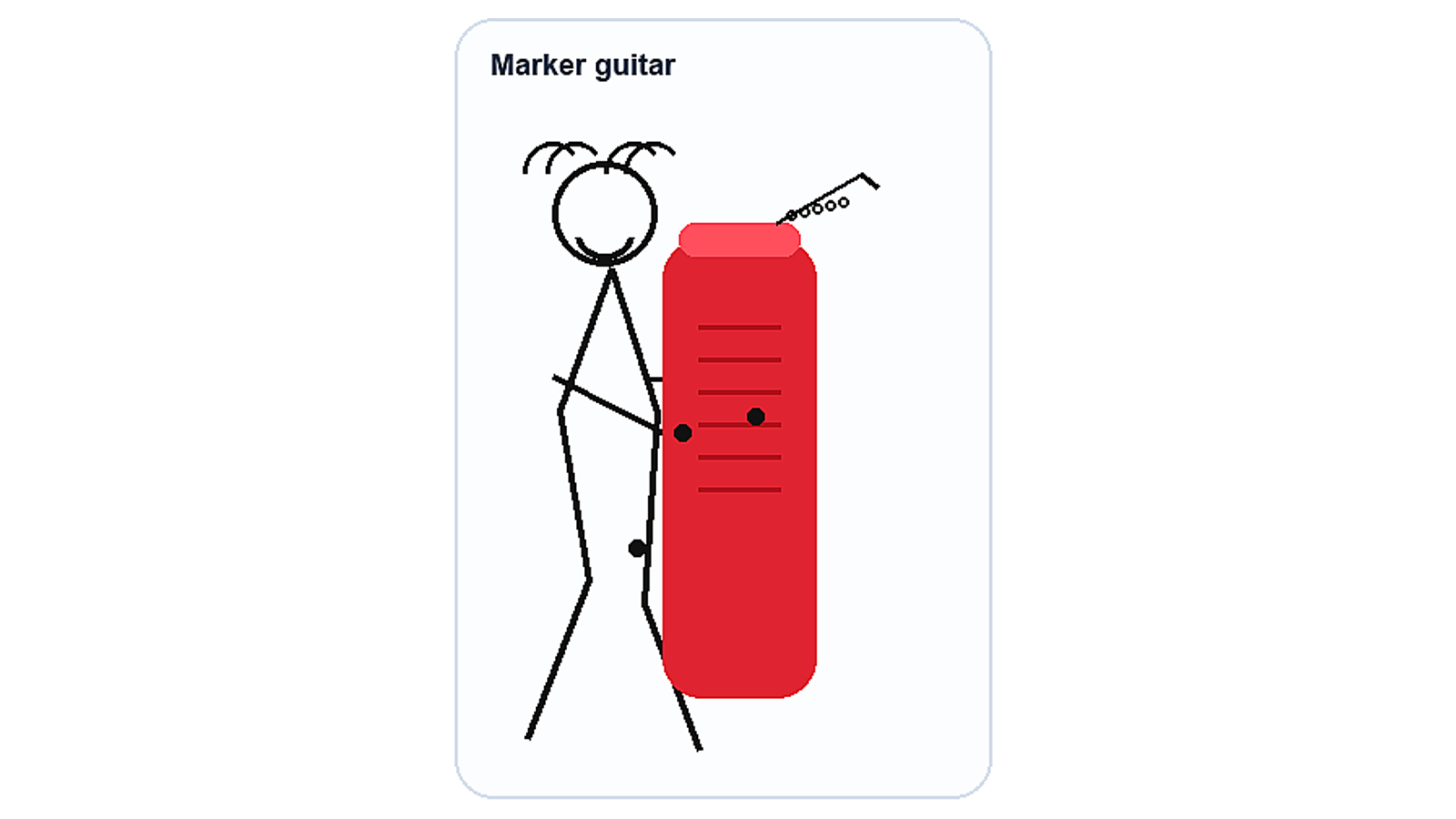
Real object cartoon prompt scenes work best when one photographed prop carries the joke and the doodle only has to finish it, giving designers, illustrators, and brand teams a cleaner black-ink visual pun at a glance. The method keeps the object recognizable, preserves wide white space, and makes the doodle responsible for the joke instead of burying the scene in extra styling.
Image Examples


Strategic Deployment Guide
Model fit: GPT Image 2 on ChatGPT first. Keep the 9:16 white-background setup, one photographed hero object, and one black-ink doodle role locked; only swap the object, represented scene element, and character action so the prop still completes the joke.
Real Object Cartoon Prompt Code
Creative composite photography, 9:16 vertical aspect ratio, clean minimalistic white background, studio lighting, high detail, clear focus.

A real [everyday object] is physically placed and perfectly inscribed in a hand-drawn cartoon in black ink. The drawing is a simple, expressive linear graphic with minimal strokes, similar to a quick sketch on paper.

The object represents [scene element] and completes a clear visual pun. A [cartoon character] interacts with it through [pose or action] in a humorous, meaningful, or unexpected way.

Keep the mix photorealistic object plus bold black line drawing. Preserve pure negative space, one clean camera angle, believable seam alignment, and an artistic, witty concept.

Use soft studio lighting, visible object texture, and enough empty space for the sketch to stay readable. Output one high-resolution 9:16 vertical image suitable for posters, social posts, or editorial art.

Negative prompt: avoid extra props, colored doodles, messy backgrounds, weak alignment, soft focus, multiple hero objects, overworked shading, or any composition where the object does not complete the joke.
Why This Framework Functions
This framework works because it uses seam control and composition constraints to give the photo and the doodle different jobs. The real object carries texture, scale, and reference stability, while the ink sketch carries gesture, humor, and scene context. That split keeps the concept from collapsing into either generic cartoon art or generic product photography.
Implementation Steps
- Choose the prop first: Start with an object whose silhouette already suggests the scene and the joke.
- Lock one contact point: Keep the body, hands, or face clearly reacting to the object’s position.
- Keep the doodle light: Let the object stay photoreal while the sketch explains the scene in a few strokes.
- Finish layout later: Add headlines or logos in Figma, Canva, or Photoshop after generation.
Application Scenarios
- Social campaign posts: Quick brand visuals built from stationery, grooming tools, snacks, or desk props.
- Editorial illustrations: Minimal visual-pun art for newsletters, blog headers, and creator announcements.
- Poster concepts: Clean object-led mockups for events, classrooms, museum shops, and playful merch.
- Product storytelling: Witty launch images for notebooks, brushes, gadgets, or everyday accessories.
Why This Prompt Works
This prompt works because it follows a single-object control principle. One real prop creates the hook, one doodle explains the action, and the empty white background keeps the gag readable at a glance. That structure makes it easy to swap objects without losing the object-to-illustration seam that defines the style.
Troubleshooting & Optimization
- The object feels pasted on: Append believable scale, one exact perspective, hands and body wrapped around the object.
- The doodle gets too busy: Append simple black-ink sketch, minimal strokes, no colored line work, no heavy shading.
- The scene loses its white-space look: Append pure negative space, clean white background, one grounded shadow, no extra props.
- The joke reads weakly: Append choose an object whose silhouette immediately explains the represented scene element.
Common Questions
- Q: What makes a real object cartoon prompt different from a normal doodle prompt?
A: The real object is not decoration. It replaces a key part of the scene, so the final image depends on seam alignment, silhouette logic, and the contrast between product-photo realism and quick ink lines. - Q: Which objects work best?
A: Props with one strong shape usually work fastest: markers, toothbrushes, clips, combs, utensils, cables, or small packaging. If the object can plausibly stand in for hair, clothing, tools, or instruments, the joke lands sooner. - Q: Which model should I try first?
A: GPT Image 2 on ChatGPT is a strong first choice when you want clean white staging, stable object detail, and restrained line work. Compare any alternative model on seam quality before publishing the result.
Use this prompt to generate your version? Share in the comments or on Twitter!
Explore more? View the Image & Design or Fun & Creative category.
I hope you found this object-and-doodle AI prompt helpful.
Follow me @bigprompt for more.
Like/Repost if you can this prompt.
Internal link:
Run a Frontend UI Workflow with AI Prompts
AI Web Design Skills for Homepages, Navigation, and CTA Flow
AI Design Skills Guide for Research, Critique, and Systems Thinking
Create TV Show Miniature Diorama Prompt Scenes
Build Stock Scanner Prompts for Market Research Workflows
Big Prompt Hub Review
This object-and-doodle prompt works well when the prop does most of the storytelling and the sketch only has to finish the thought. Its main limit is that weak object choice or sloppy seam alignment can kill the joke quickly, so a human still matters when choosing props, comparing generations, trimming noisy outputs, and checking whether the visual pun still reads in one glance.